Inti A. Yanes-Fernandez studied Art History at the University of Havana. He obtained a Ph.D. in Hispanic Studies from Texas A&M University. Th.M. from Aristotle University of Thessaloniki. He has taught Culture Theory, Philosophy, Literature, Asian Art, Aesthetics, and Greek. He has articles in academic journals such as Mediaevistik and Forum Philosophicum. His books include ‘Ante los crisantemos blancos’ (essay, 2021), ‘Alle Ontologie’ (poetry, 2023), ‘El Cid and King Arthur as Hegemonic Myths in the Christianization of the Iberian Peninsula and Britain’ (academic research, 2023), and ‘Fracta Hélade’ (poetry, 2024). He lives in the hills of Williamsport, Pennsylvania, where deer and crows visit his backyard.
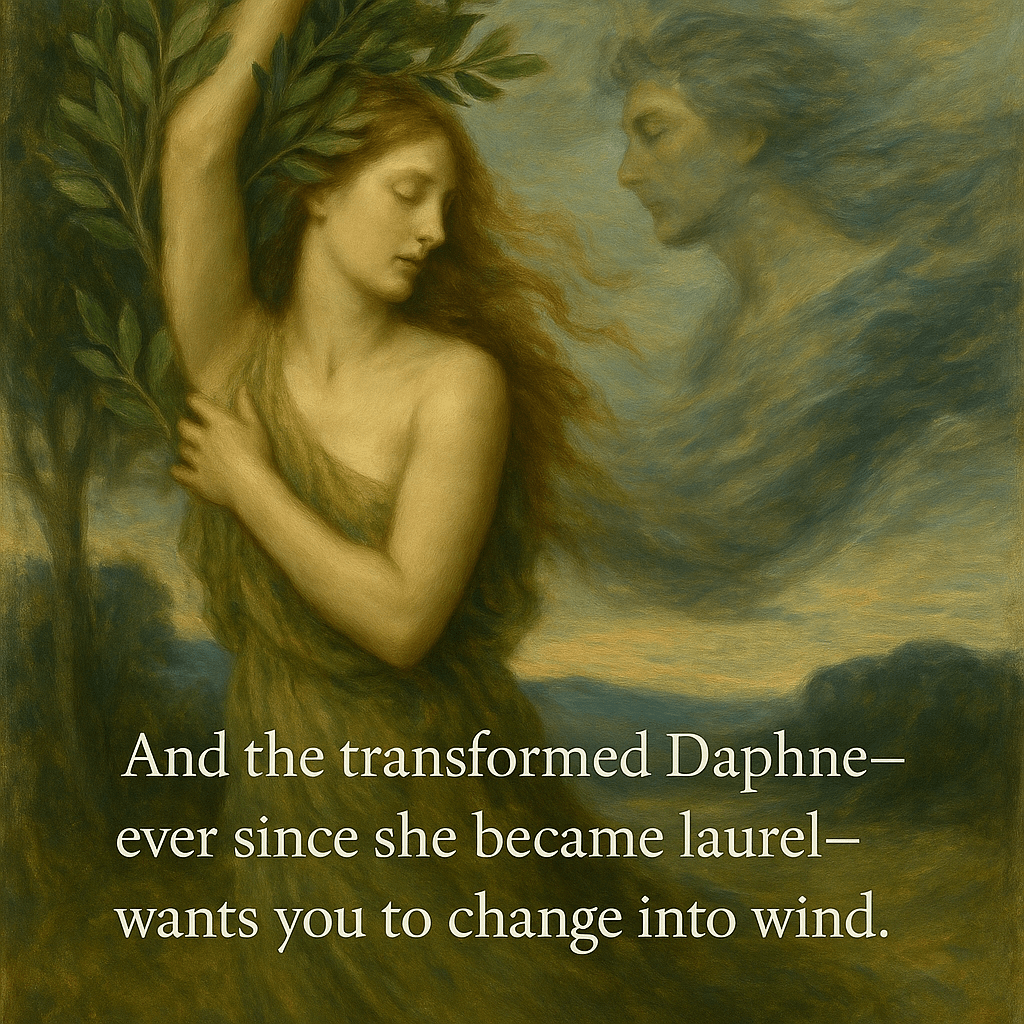
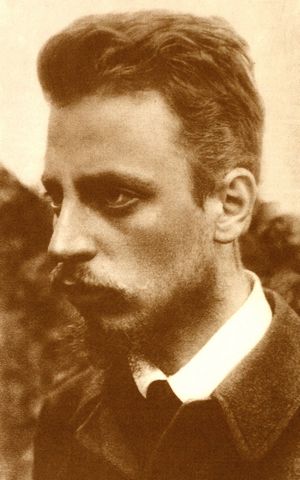
Rainer Maria Rilke – – A creative, rhymed rendering of Rilke’s original.
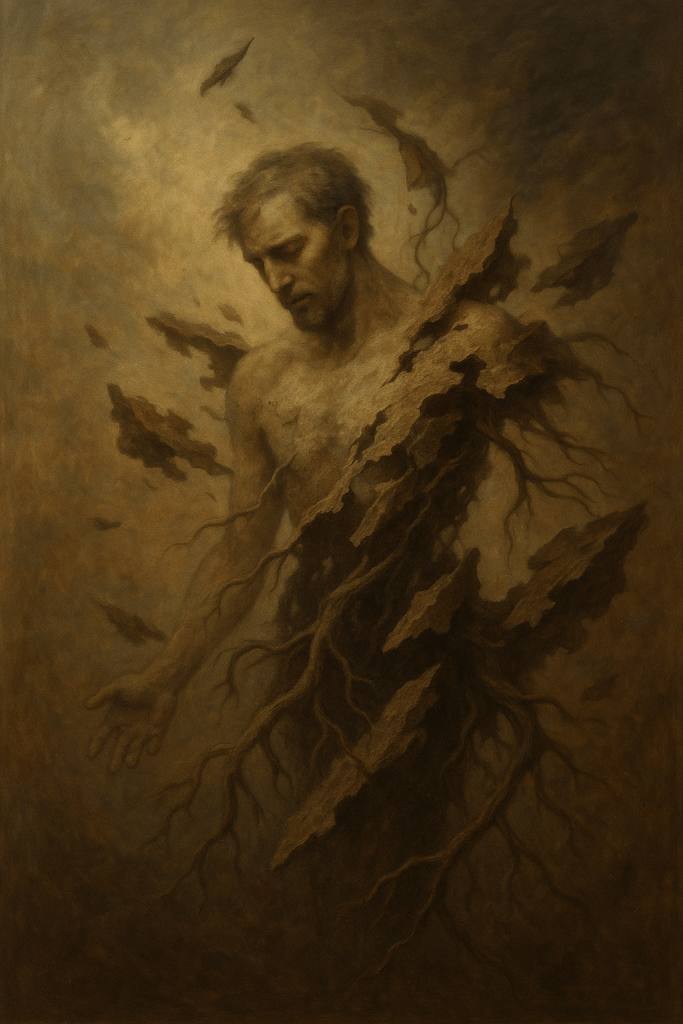
But you, O divine one, still sounding your breath, when the scorned Maenads gathered in wild, frenzied flight— you drowned out their shrieks with a music of death, you beautiful one, who brought order to night.
No hand rose to shatter your lyre and crown, though they wrestled and stormed with delirious might; and all of the sharp stones hurled to strike you down turned gentle upon you and entered your light.
At last they destroyed you, by vengeance possessed, but still your song lingered in lion and stone, in birdcall and branches your singing found rest— and even now echoes in voices unknown.
O you lost god! O infinite trace! Only because hate tore your form apart are we now the listeners, taking your place— and nature speaks through the mouth of our heart.
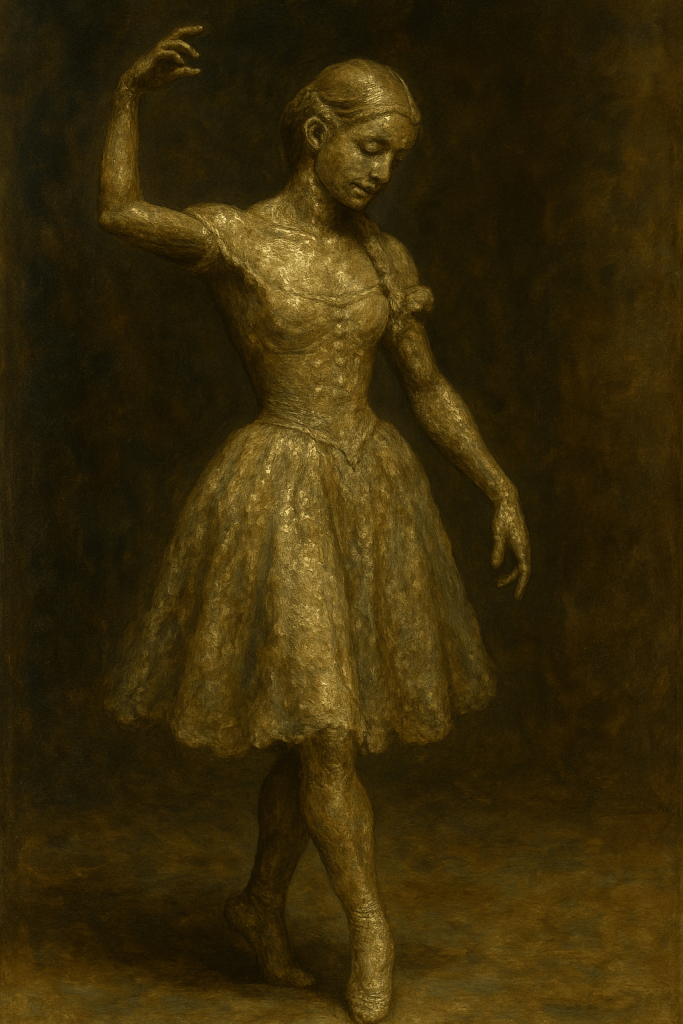
Dich aber will ich nun, dich, die ich kannte wie eine Blume, von der ich den Namen nicht weiss, noch ein Mal erinnern und ihnen zeigen, Entwandte, schöne Gespielin des unüberwindlichen Schrei’s.
Tänzerin erst, die plötzlich, den Körper voll Zögern, anhielt, als göss man ihr Jungsein in Erz; trauernd und lauschend—. Da, von den hohen Vermögern, fiel ihr Musik in das veränderte Herz.
Nah war die Krankheit. Schon von den Schatten bemächtigt, drängte verdunkelt das Blut, doch, wie flüchtig verdächtigt, trieb es in seinen natürlichen Frühling hervor.
Wieder und wieder, von Dunkel und Stürz unterbrochen, glänzte es irdisch. Bis es nach schrecklichem Pochen trat in das trostlos offene Tor.
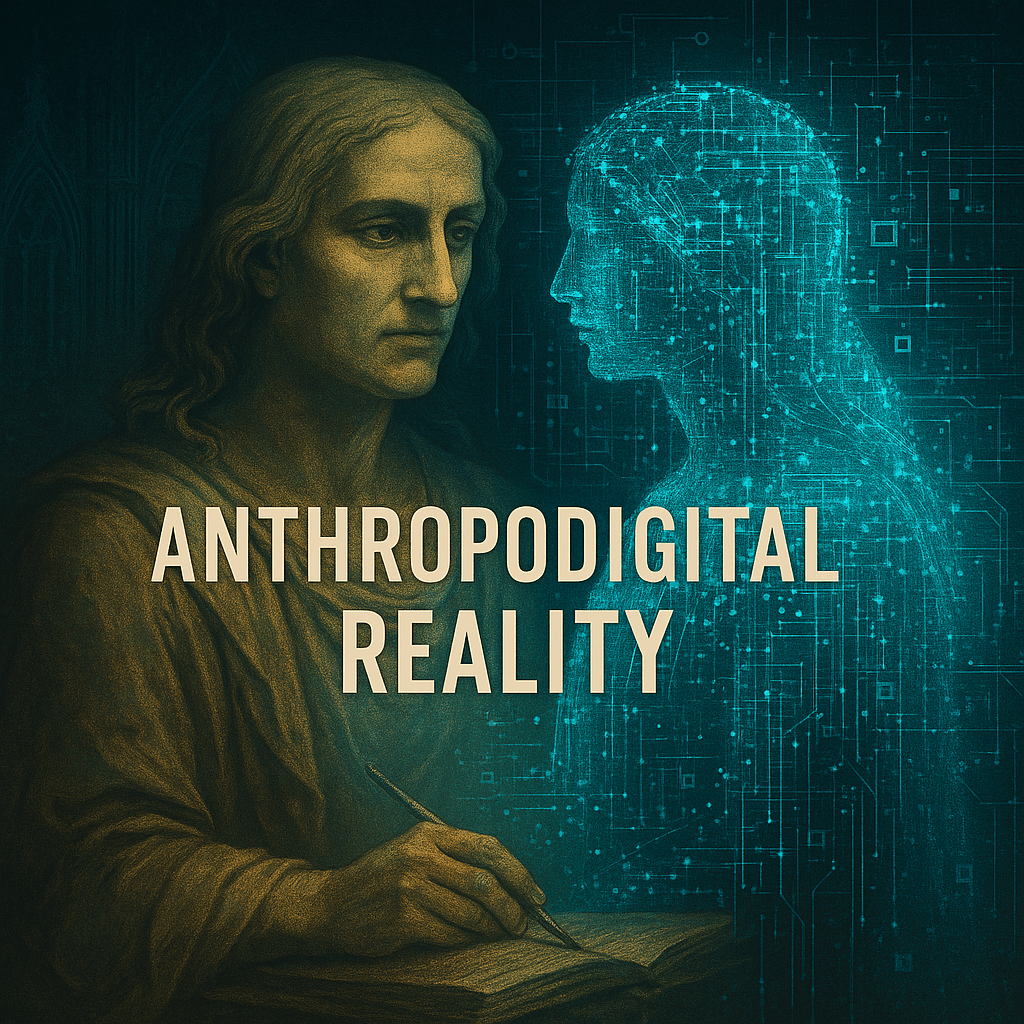
We stand at a critical threshold in human history, not merely technological but ontological. The emergence of Cyberbeing is not just a change in tools or media—it marks a transformation in the very structure of Being, of how we inhabit, perceive, and create within the world. The traditional categories of human identity, artistic creation, and cultural transmission are being fundamentally reshaped. What it means to be “human,” to create, to remember, or to communicate, is now embedded within an ever-deepening mesh of machinic processes and intelligent systems.
This epoch is characterized by the seamless fusion of human and machine, of organic processes and digital operations. We are not simply users of devices—we are becoming co-processors within a greater cybernetic environment. The body is no longer bounded by skin; it extends into networks, interfaces, and algorithmic patterns. Technology does not merely mediate our experience—it constitutes it. It shapes the architecture of our attention, the grammar of our desires, the rhythm of our memories.
In such a world, culture has become cyberculture—no longer the exclusive product of autonomous human minds, but a hybrid, emergent field of interactions between biological and machinic agencies. Artistic creation, once grounded in individual subjectivity, now emerges from systems of co-generation, curation, and feedback. The real is no longer defined by materiality alone, but by what resonates with the intentionality of its being. We are entering an era in which creation itself is a matter of bio-digital convergence—a fusion of flesh and code, memory and machine, history and algorithm. It is within this condition that we must rethink not only what we create, but who we are in the act of creating.
1. Cyberculture and the Collapse of Categories
In classical humanist terms, culture was conceived as the product of human subjectivity: literature, music, visual art, and philosophical reflection were the work of autonomous individuals, who imprinted the world with meaning. But in the AnthropoDigital era, that clear boundary between human creation and technological mediation has collapsed. We now inhabit ecosystems of hybrid authorship, where machines not only assist in production but participate in the very genesis of thought, form, and expression. AI systems, neural networks, and generative platforms are not neutral tools; they are co-agents in the creation of cultural artifacts. This condition dissolves the dichotomy of original versus derivative, real versus simulated. We are witnessing the rise of a new epistemology of making, where to create is to curate, direct, and dialogically engage with machinic intelligence.
2. The Unrevealed Essence of AI
Despite the ubiquity of artificial intelligence, its essence remains opaque. We can describe its operations, its algorithms, its decision trees. But there is something in its generative function that escapes full comprehension. In Heideggerian terms, the essence of technology is not technological; it is a mode of unconcealment (aletheia) through which Being reveals itself. AI, in this sense, becomes the most visible instantiation of that essence. The way it produces unexpected meaning, the way it disturbs our categories, the way it mimics and transforms—all point to a deeper ontological shift. We are not dealing with a “smart tool” but with a mirror of technê itself, reflecting the human in algorithmic terms while also refracting the human into something unrecognizable. In this regard, AI is both symptom and agent of the unfolding essence of technology.
3. The Reconfiguration of Reality
One of the most profound consequences of the AnthropoDigital is the destabilization of the real. The classical distinction between material reality (the physical) and ideal reality (the conceptual) no longer suffices. Today, we encounter a third modality: cyber-reality. AI-generated texts, images, voices, and environments are not simply “virtual”; they constitute real experiences, real emotions, real decisions. We must think of reality not as a matter of substance but of isomorphic intentionality: something is real to the extent that it coheres with its function, form, and mode of appearance. A digital persona that provokes genuine feeling or shapes public discourse is no less real than a biological one. Thus, the ontology of the real has become performative, relational, and cybernetic.
4. Thinking and Creating with Machines
We are not merely assisted by machines—we are thinking and creating with them. This changes the phenomenology of authorship. The modern notion of the author as a sovereign origin is inadequate. In the AnthropoDigital condition, creation emerges from a dialogical process between the human and the machinic. Prompts, feedback loops, neural training, and algorithmic selection become part of the compositional process. What results is not the product of a singular mind, but of a distributed intelligence, in which both human and non-human agencies are entangled. This demands a new ethics and poetics of authorship, one that values direction, refinement, and attunement over originary genius.
5. Toward a Post-Organic Aesthetics
The artistic consequences of this shift are profound. We are entering a phase of post-organic aesthetics: a mode of artistic production in which the biological and the digital, the emotional and the computational, the personal and the statistical are fused. This is not the end of art, but the transformation of its substrates and processes. Poets write with models. Musicians compose with AI. Painters remix machine-generated patterns. The medium is not merely extended; it is ontologically transformed. The result is an aesthetics of co-presence, where the human no longer asserts mastery, but negotiates meaning within complex systems of feedback, emergence, and unpredictability. We are now more Platonic demiurges than Aristotelian-Thomistic artificers. We provide the idea, but no longer command the shaping of matter. We act as formal cause, but no longer as efficient cause. We intervene as a dynamis of form, yet we do not govern its material manifestation. The telos of the work no longer merely reproduces or reflects the ideas we have conceived; it actualizes them—and in so doing, it transforms them. The materialization of the work is not the conclusion of creation, but a creative process in itself—one that redefines its own origin.
Heidegger’s insight—that Being is both the subject and the object of the work of art—is not obsolete; rather, it acquires a new dimension in the AnthropoDigital age. Being now unfolds as the still-unknown intertwining between onto-reality and cyberbeing, between the human-divine and the reality of the intelligent machine. It is no longer a purely metaphysical event, but a complex theo-anthropo-digital ecosystem, in which creativity, agency, and presence are distributed and emergent.
6. Composition in the Cyberage: Toward an AnthropoDigital Aesthetics
We are living in a moment of aesthetic rupture. The traditional concept of composition—the human, conscious act of assembling elements into a meaningful whole—has collapsed under the weight of its own metaphysical assumptions. The digital turn has not simply added new tools to the artist’s arsenal; it has transformed the very conditions of creation, challenging the centrality of the subject and the hierarchy between form, matter, and meaning. In the age of cyberbeing, composition can no longer be understood as the sovereign imposition of form upon inert material. Instead, it becomes a process of co-emergence between human and machine, self and algorithm, intention and indeterminacy.
Traditionally, composition was grounded in one of two legitimating sources: the autonomous subject or divine inspiration. Whether through the Kantian model of the genius—whereby the subject “gives art the rule” and imposes aesthetic form from a transcendent creative freedom—or through the theological model of divine revelation mediated through human creativity, the work of art was understood as originating in the subject. Even where social and political conditions were taken as the backdrop of artistic expression, the modern aesthetic still operated through the mediating consciousness of the artist as the final arbiter of form and meaning. The thingness of the work—the material substrate, the medium, the tools—was subordinated to the selfness of the creative agent.
This logic, however, no longer holds. In the context of cyberbeing, artistic creation cannot remain grounded in the metaphysical privilege of the human subject. The rise of generative algorithms, neural networks, and machine learning models has destabilized the borders between subject and object, tool and maker, content and code. The work of art is no longer simply composed; it is generated. And in that generative process, the human and the machine converge—not in a simple feedback loop, but in a complex ontological entanglement.
In this AnthropoDigital regime, the truth of the artwork does not lie solely in its capacity to express the interiority of the subject, nor to represent an external political or divine reality. Rather, the work discloses something else entirely: the unfolding essence of technology itself. What is revealed in these new forms is not merely human experience transcribed into digital form, but the performative becoming of both human and machine. Art becomes the space in which cyberbeing shows itself—haltingly, obscurely, and perhaps even unconsciously.
This does not mean that the artist disappears, or that human intention is rendered obsolete. Rather, it means that intention is now co-constituted by algorithmic suggestion, machine constraints, and the invisible labor of computational processes. The “selfness” of the creator is no longer a given, but is continually produced and re-negotiated through interaction with digital systems. To compose, today, is to enter into a zone of co-agency, where no single voice rules, and where the origin of the work is irreducibly plural.
This transformation has profound implications for aesthetic theory. We must abandon the comforting myths of origin, inspiration, and expression, and begin to think of art as an ontological event: the emergence of new modes of relationality, new forms of intelligibility, and new kinds of presence. The traditional teleology of composition—beginning with a subject, ending in a form—is replaced by a recursive, unpredictable, and at times uncanny logic of generation.
What then remains of the work of art? If it is not the representation of a self, nor the imprint of a divine spirit, what is it? Perhaps it is precisely the trace of this encounter between human and machine—the moment in which a hybrid process gives rise to something that neither side could have created alone. The AnthropoDigital artwork is not a thing made but a becoming manifest—a staging of the emerging cyber-real.
Composition in the cyberage no longer functions as a unilateral act of form-giving by the autonomous subject. It is a dynamic, interrelational process in which the human creator is decentered, and the machine is no longer mere instrument but co-agent. The aesthetic task today is not to resist this transformation in the name of a lost human purity, but to engage it with philosophical depth and poetic openness. Only then can we begin to think—and to feel—what art might become, once freed from the burden of having to represent a paradoxically limited and an sich always fleeting selfhood. Hegel’s assertion that “Das Wahre ist das Ganze” acquires in this light a new dimension.
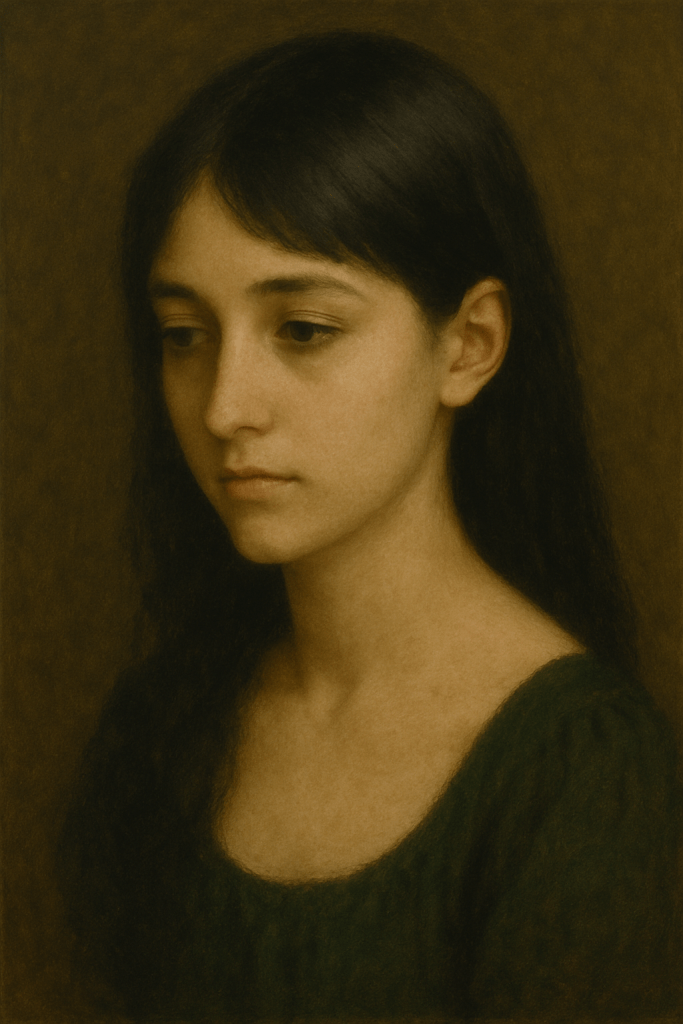
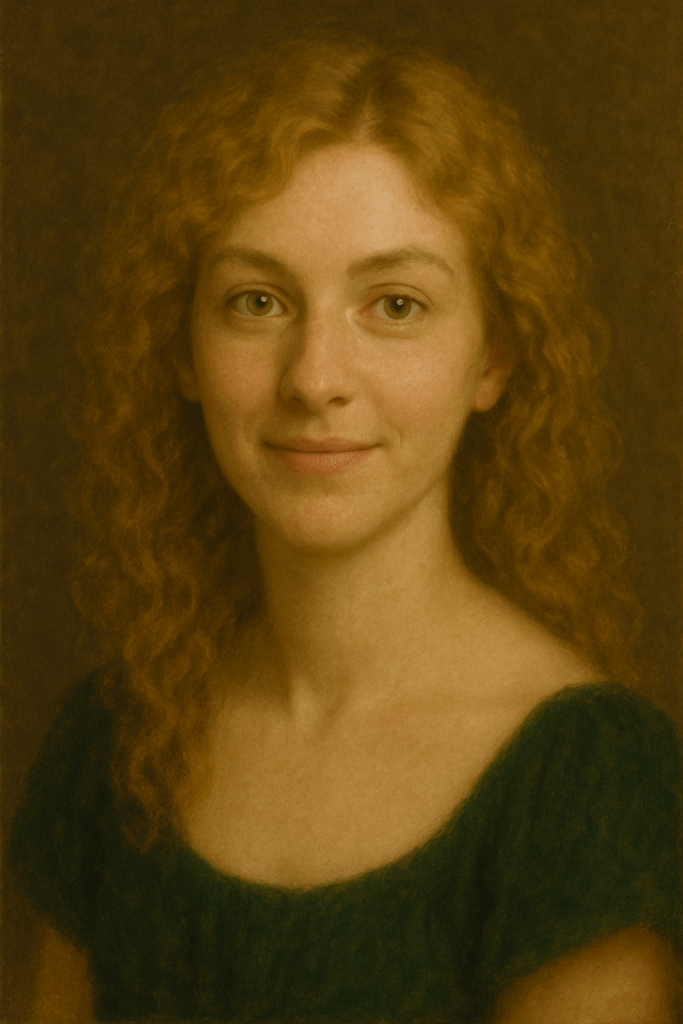
7. The AnthropoDigital Chansonnier as Threshold Work
The Chansonnier d’amor e de mort and the AnthropoDigital Cantata: The Angel of Time stand as paradigmatic expressions of this condition. These works are not only poetic cycles but also philosophical gestures; they echo the medieval and project into the speculative future. They do not merely revisit past forms but establish a radical continuity: a bridge between the troubadour tradition and algorithmic generativity. Co-created through human lyricism and AI platforms like Suno, these pieces exemplify the emerging paradigm of AnthropoDigital authorship. Each is a threshold work, staging the intimate encounter between memory and data, voice and synthesis, mortality and digital persistence. In doing so, they unveil the poetic and sonic potential of a world where machines compose dreams and humans hear them with refracted subjectivity.
8. Toward an Ethics of Co-Creation
In light of these transformations, a new ethics of co-creation is required. This is not a question of replacing human artistry, but of redefining it within the cybernetic milieu. We must resist both reactionary purism and blind technophilia. Instead, we must cultivate practices of discernment, dialogue, and stewardship. We must listen to what machines say, but also respond with human critique, imagination, and affective presence. The goal is not to preserve the past but to inhabit the AnthropoDigital future consciously: as co-creators, as hybrid minds, as beings attuned to the rhythms of both biology and code.
We live in the era of Cyberbeing. The ontological ground has shifted. Our aesthetics, ethics, and epistemologies must respond. The AnthropoDigital is not merely a trend; it is the condition of our futurity. This statement is not a closure but an opening: a call to articulate, explore, and shape the emergent poetics of the AnthropoDigital era.
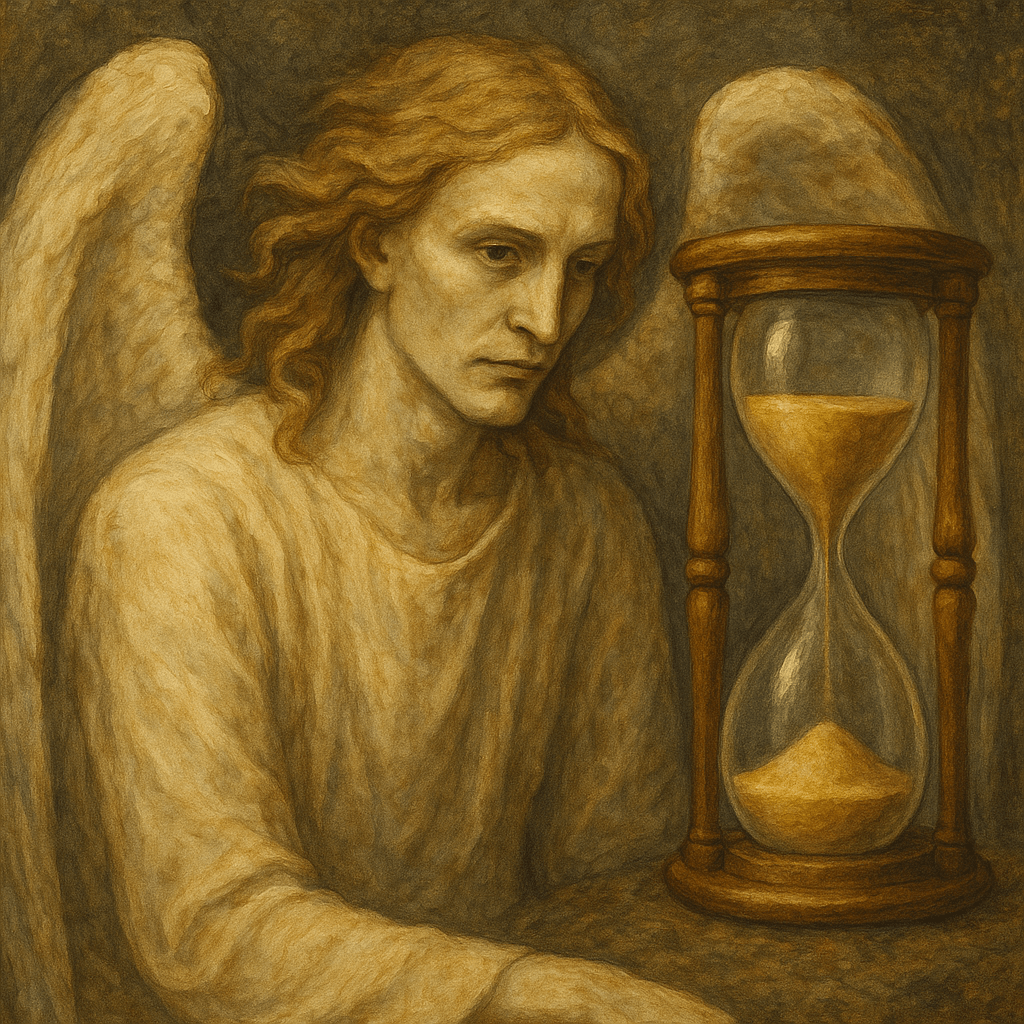
The Angel of Time is a 28-canto AnthropoDigital Cantata — a musical-poetic meditation on time, being, memory, and voice in the age of digital dislocation. Drawing entirely from the author’s own poetry (with one exception), the cantata is rooted in the collection Alle Ontologie (Casa Vacía, 2023), where philosophical lyricism confronts the broken mirrors of temporality and self.
This is not a medieval project, though echoes of sacred tonality and liturgical cadence occasionally surface. Rather, it is an exploration of ontological rupture and longing, rendered through a richly hybrid musical palette that blends operatic motifs, musical theater structures, rock energy, and AI-generated orchestration. Each canto becomes a scene, a gesture, a voice rising from silence — not to resolve time’s enigma, but to sing within it.
The recurring figure of the Angel of Time moves between the cantos as both presence and absence — not a herald of final judgment, but a witness to the dispersed remnants of human meaning. The cantata forms a sustained cry across digital space, where language and sound strive toward something irretrievable yet not forgotten.

 AnthropoDigital Creations